

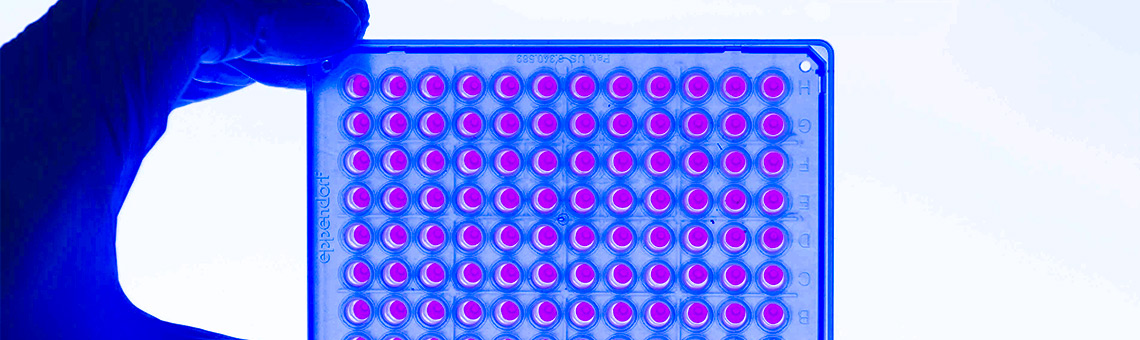
Cell-Based Assay Services for Drug Discovery
Cellular assays for compound profiling, target engagement and functional pharmacology
PozeSCAF develops cell-based assays to quantify compound activity, cellular potency, target engagement and functional responses. Integrated biology, medicinal chemistry and computational expertise enables experimental data to directly inform compound optimisation and progression.
Comprehensive Cell-Based Assay Capabilities
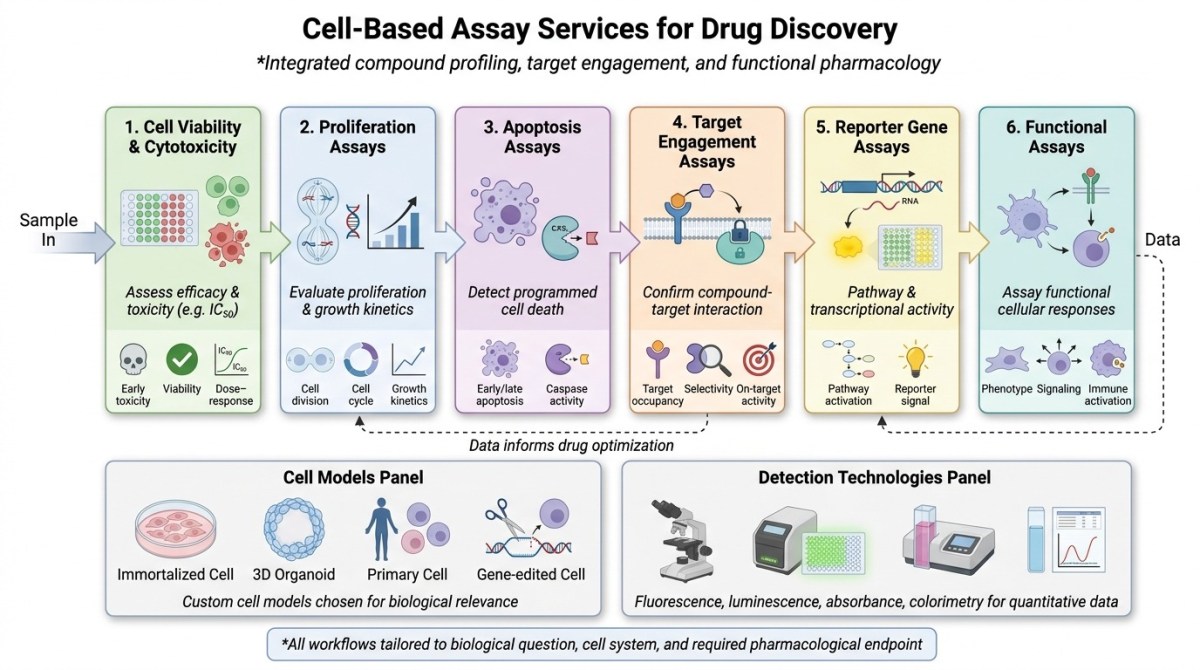
PozeSCAF provides cell-based assays spanning viability, proliferation, apoptosis, target engagement, reporter activity and functional cellular responses. Each assay is configured around the biological question, cellular system and required endpoint.
Cell Viability and Cytotoxicity Assays
Cell viability and cytotoxicity assays quantify the effects of therapeutic compounds on cell survival and cellular health. These assays enable assessment of compound efficacy, therapeutic window and potential toxicity following treatment.
Experimental conditions are optimised for the selected cell model, treatment duration, concentration range and biological endpoint, enabling quantitative dose–response analysis and IC₅₀ determination.
Applications
- Early toxicity assessment
- Therapeutic window evaluation
- Cytotoxicity profiling
- IC₅₀ determination
Cell Proliferation Assays
Cell proliferation assays quantify changes in cell growth and division following compound treatment. They are used to evaluate antiproliferative activity, compare compound potency and characterise growth responses across cellular models.
Assay formats may assess DNA synthesis, metabolic activity, cell number or growth kinetics, depending on the biological question and required endpoint.
Applications
- Cell growth inhibition
- Antiproliferative activity
- Cell cycle progression studies
- Growth kinetics
Typical Readouts
- DNA synthesis assays
- Metabolic activity-based proliferation assays
- Cell counting assays
Apoptosis Assays
Apoptosis assays distinguish programmed cell death from general reductions in viability or proliferation. They help determine whether compound treatment activates defined apoptotic pathways and whether cell death occurs through early or late apoptotic events.
Quantitative endpoints may include caspase activation, membrane changes and apoptosis-associated cellular responses.
Applications
- Programmed cell death analysis
- Early and late apoptosis detection
- Caspase activation studies
- Apoptotic pathway evaluation
Target Engagement Assays
Target engagement assays determine whether a compound interacts with its intended molecular target in a cellular environment. They help link target occupancy with downstream biological responses and distinguish on-target activity from indirect cellular effects.
Assay design is selected according to target localisation, cellular expression, compound properties and the required engagement endpoint.
Applications
- Cellular target engagement confirmation
- Target occupancy assessment
- On-target activity verification
- Compound selectivity evaluation
- Target modulation studies
- Cellular pharmacology
- Cellular pharmacology
- Biomarker correlation studies
- Dose-dependent target engagement analysis
Reporter Gene Assays
Reporter gene assays quantify pathway activation, inhibition or transcriptional regulation through measurable reporter signals. They provide sensitive readouts of receptor activity, intracellular signalling and promoter regulation.
Reporter systems can be configured to examine pathway-specific responses and concentration-dependent compound effects.
Applications
- Signalling pathway activation
- Transcriptional regulation
- Receptor activation studies
- Promoter activity analysis
Gene & Protein Expression Analysis
Gene and protein expression studies quantify target modulation, pathway activity and biomarker expression following genetic or pharmacological intervention. These assays provide quantitative insights into transcriptional regulation, protein abundance, signalling responses and pharmacodynamic effects.
Experimental workflows can be configured to evaluate gene expression, protein expression, phosphorylation status and cellular localisation across diverse biological systems.
Applications
- Target validation
- Pathway profiling
- Biomarker discovery
- Pharmacodynamic assessment
- Mechanism-of-action studies
- Gene silencing and CRISPR validation
Functional Cell-Based Assays
Functional cell-based assays measure changes in defined cellular behaviours following target modulation. Depending on the programme, endpoints may include receptor activity, intracellular signalling, immune-cell responses or changes in cellular phenotype.
Assays are selected according to the biological function that must be measured rather than relying solely on general viability or reporter-based endpoints.
Applications
- Receptor function
- Cell signalling
- Immune cell activation
- Cellular phenotype assessment
Cell Models
Cellular models are selected according to target expression, disease relevance, pathway integrity and the required pharmacological endpoint. Model selection may involve endogenous systems, engineered cell lines, primary cells or disease-relevant cellular backgrounds.
The choice between stable, transient, gene-edited and primary-cell models depends on assay duration, target abundance, biological complexity and the level of physiological relevance required.
- Immortalised cell lines
- Primary cells
- Stable cell lines
- Transiently transfected cells
- Gene-edited cellular models
- Disease-relevant cellular models
- Patient-derived cells (where applicable)
- Custom cell models developed for specific research programmes
Detection Technologies
Detection methods are selected according to assay sensitivity, dynamic range, throughput and compatibility with the biological endpoint. Fluorescence, luminescence, absorbance and colorimetric formats enable quantitative measurement across diverse cellular assay designs.
Data acquisition and analysis are configured to support concentration–response evaluation, comparative compound profiling and multiparametric interpretation where required.
- Fluorescence-based detection
- Luminescence-based detection
- Colorimetric assays
- Absorbance measurements
- Microplate reader-based analysis
- Multiparametric assay readouts
- Quantitative data acquisition and analysis
Ready to Advance Your Drug Discovery Programme?
Whether your programme requires advanced cellular models, disease-relevant experimental systems, or customised in vitro biology workflows, PozeSCAF’s scientists work closely with clients to develop experimental strategies that support confident drug discovery decisions from target validation through lead optimisation.