

Molecular Glues
Targeted Protein Degradation (TPD) presents a promising strategy for addressing undruggable proteins, which constitute over 85% of disease targets. TPD harnesses the cell’s intrinsic protein degradation mechanism, known as the ubiquitin-proteasome system (UPS), to eliminate disease-causing proteins. This innovative approach involves the deployment of small molecules capable of binding both to the protein of interest (POI) and to an E3 ubiquitin ligase. By doing so, these molecules induce the degradation of the POI via the proteasome pathway.
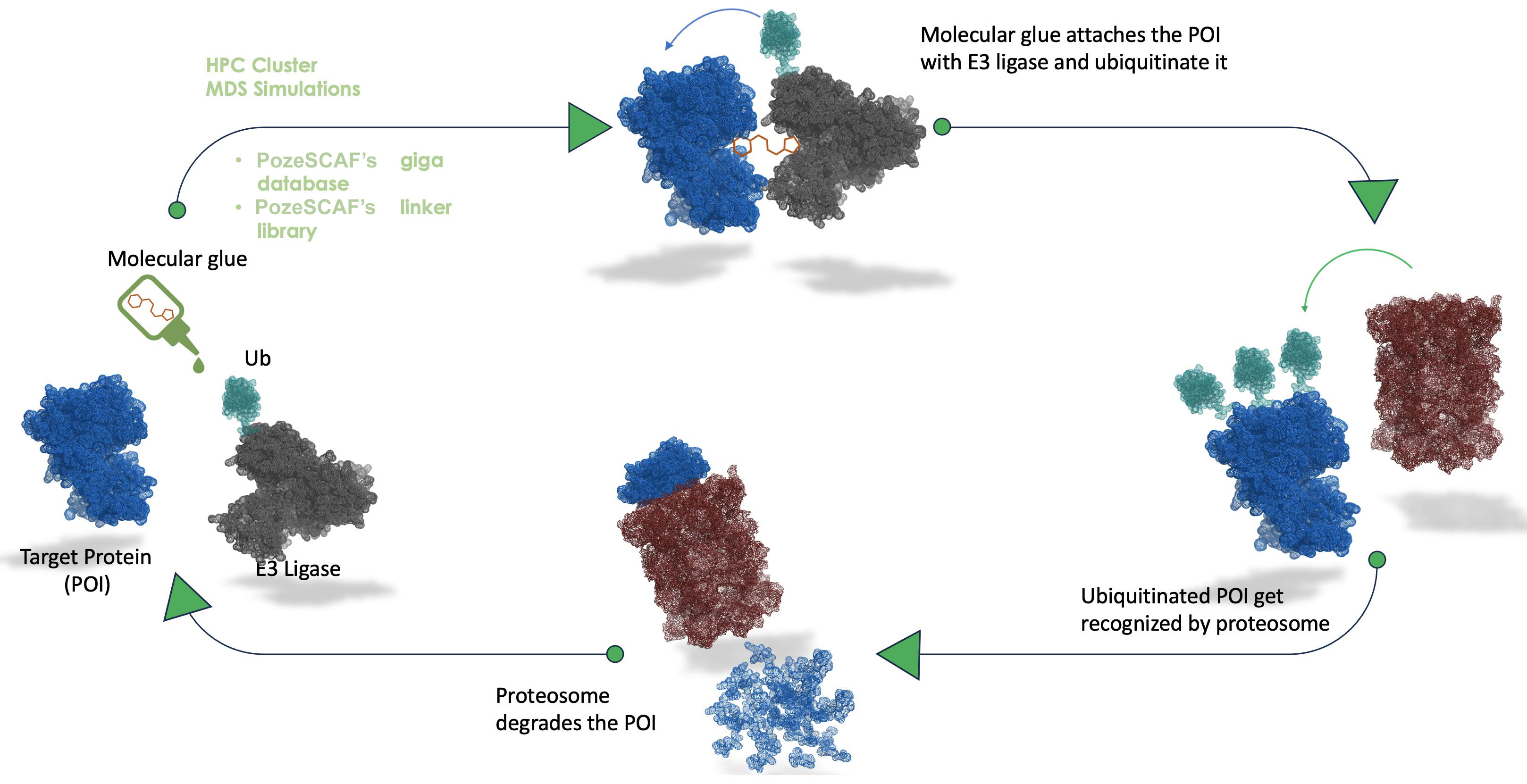
Molecular Glues exemplify a cutting-edge strategy within TPD. Molecular Glues are small, monovalent molecules that bind to both the Protein of Interest (POI) and the E3 ligase. Our expanding in-house library of drug-like molecular glues, generated through Generative AI and de novo design strategies, is specifically tailored to interact with various E3 ligases. This resource holds promise for targeting previously undruggable targets.
Leveraging machine learning models alongside molecular docking, molecular dynamics simulations, and other structure-based drug design techniques, we evaluate the binding affinity of these compounds towards both the E3 ligase and the POI. This comprehensive approach aids in prioritizing synthetically feasible compounds (IMIDs) with high potential.
Simultaneously, our predictive models for permeability, plasma stability, plasma protein binding, solubility, hERG channel activity, and various toxicity aspects (including genotoxicity, hepatotoxicity, renal toxicity, etc.) contribute to the identification of promising drug candidates from the prioritized compounds.
Embrace the future of Molecular Glues development with AxDrug. Contact us today to explore how our AI-powered platform can accelerate your journey towards novel therapeutics.